![]() |
![]() |
![]() |
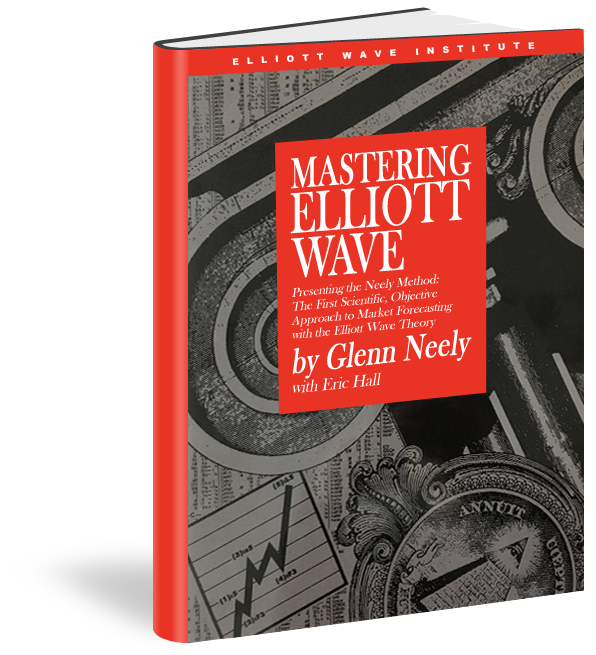
In his classic book, Mastering Elliott Wave, Glenn Neely teaches his revolutionary approach to Wave theory, called NEoWave (advanced Elliott Wave). Continuously in print since its publication in 1990, this groundbreaking book changed Wave theory forever thanks to these scientific, objective, and logical enhancements to Wave forecasting. Step-by-step, Mr. Neely explains his advanced techniques and new discoveries.
Start reading chapter 1 below...
He had spent three days hunting for the ghost in the machine. In the world of vintage tech recovery, a corrupted flash memory was a death sentence unless you had the "Dump"—the digital DNA of the television.
Elias exhaled, the smell of ozone and solder suddenly sweet. He hadn’t just fixed a TV; he’d pulled a piece of obsolete history back from the digital void.
The results were usually dead ends—broken Mega.nz links or password-protected archives from 2014. But tonight, a single hit appeared on the fourth page. No username, just a file size: .
Elias clicked. The download bar crawled with agonizing slowness. In this windowless basement, time was measured in bytes. When the progress reached 100%, he extracted the .bin file from the .rar archive with trembling fingers.
The fluorescent lights of the repair shop hummed a low, mocking B-flat as Elias stared at the blank screen of the 32-inch LED. On his workbench lay the culprit: a CV9202L-A24 mainboard, its processor cold and lifeless.
He adjusted his glasses and typed the string into the search bar of a shadowy firmware forum one last time: .
He reconnected the LVDS cable, plugged in the power cord, and pressed the tactile 'On' button. For five seconds, nothing. Then, a flicker. The backlight bled through the edges of the panel, and suddenly, the logo splashed across the screen in crisp 1366x768 resolution.
He hooked up his CH341A programmer, clipped the "spider" lead to the tiny eight-legged EEPROM chip on the board, and hit Write . The status bar turned green. "Come on, you piece of junk," he whispered.

He had spent three days hunting for the ghost in the machine. In the world of vintage tech recovery, a corrupted flash memory was a death sentence unless you had the "Dump"—the digital DNA of the television.
Elias exhaled, the smell of ozone and solder suddenly sweet. He hadn’t just fixed a TV; he’d pulled a piece of obsolete history back from the digital void.
The results were usually dead ends—broken Mega.nz links or password-protected archives from 2014. But tonight, a single hit appeared on the fourth page. No username, just a file size: . Download CV9202L A24 1366X768 TOKAI DUMP rar
Elias clicked. The download bar crawled with agonizing slowness. In this windowless basement, time was measured in bytes. When the progress reached 100%, he extracted the .bin file from the .rar archive with trembling fingers.
The fluorescent lights of the repair shop hummed a low, mocking B-flat as Elias stared at the blank screen of the 32-inch LED. On his workbench lay the culprit: a CV9202L-A24 mainboard, its processor cold and lifeless. He had spent three days hunting for the ghost in the machine
He adjusted his glasses and typed the string into the search bar of a shadowy firmware forum one last time: .
He reconnected the LVDS cable, plugged in the power cord, and pressed the tactile 'On' button. For five seconds, nothing. Then, a flicker. The backlight bled through the edges of the panel, and suddenly, the logo splashed across the screen in crisp 1366x768 resolution. He hadn’t just fixed a TV; he’d pulled
He hooked up his CH341A programmer, clipped the "spider" lead to the tiny eight-legged EEPROM chip on the board, and hit Write . The status bar turned green. "Come on, you piece of junk," he whispered.